Deciding how to move forward when you are struggling with substance use or mental health conditions is a heavy task. You might feel like you are at a crossroads where one path requires you to leave your family and job for a hospital stay, while the other feels too light to make a real difference.
This is where intensive outpatient treatment comes in. It is designed to bridge that gap, offering you a level of support that is more rigorous than standard counseling but flexible enough to fit into your existing life. In this article, we will explore whether this middle ground is truly worth the investment of your time and energy. You will learn about the clinical effectiveness of these programs, how they compare to inpatient care, and what you can expect as you work toward long term recovery.
Quick Takeaways
- Flexible & Effective: IOPs provide 9-19 hours of weekly therapy that’s as effective as inpatient care for stable individuals, letting you maintain work and family responsibilities while healing.
- Affordable Access: Intensive outpatient treatment typically costs significantly less than residential programs and is often covered by insurance, making quality addiction and mental health care more accessible.
- Whole-Person Care: Programs address both substance use and co-occurring mental health conditions simultaneously through evidence-based therapies, peer support, and family involvement for lasting recovery.
What Makes Intensive Outpatient Treatment a Strong Choice for Dealing with Drug Use?

An intensive outpatient program, often called an IOP, focuses on providing high-quality addiction treatment and mental health care without requiring you to move into a facility. For many adults, the ability to stay at home is the deciding factor. You get to sleep in your own bed, eat your own food, and remain present for your loved ones.
- You can maintain your career and family roles while receiving clinical support.
- Most programs offer at least nine hours of structured therapy every week.
- Peer groups provide a built-in community of people who understand your journey.
- Evidence-based therapies help you apply new skills to real-world situations immediately.
Clinical Success Rates and Behavioral Therapy Outcomes
When you look at the research, the evidence for the effectiveness of an intensive outpatient program is quite strong. The Substance Abuse and Mental Health Services Administration (SAMHSA) notes that these programs are a critical part of the continuum of care, especially for those transitioning from higher levels of support. Because you are still engaged in your community, you can address triggers as they happen rather than waiting until you leave a protected hospital environment.
- Programs often include individual therapy, group sessions, and family involvement.
- You will likely work with a treatment plan that addresses co-occurring disorders.
- Behavioral therapy helps you identify the underlying factors of drug use or alcohol abuse.
Studies suggest that for individuals with a stable home environment, this model is just as effective as more restrictive options. According to research published by the National Institutes of Health, intensive outpatient programs have outcomes equally comparable to those of residential and inpatient treatment.
This means you are not sacrificing quality for convenience. You are choosing a path that respects your autonomy while providing the tools you need to heal your brain and body. However, it’s important to note that every level of care in addiction treatment has a role, and intensive outpatient treatment is not suitable for everyone.
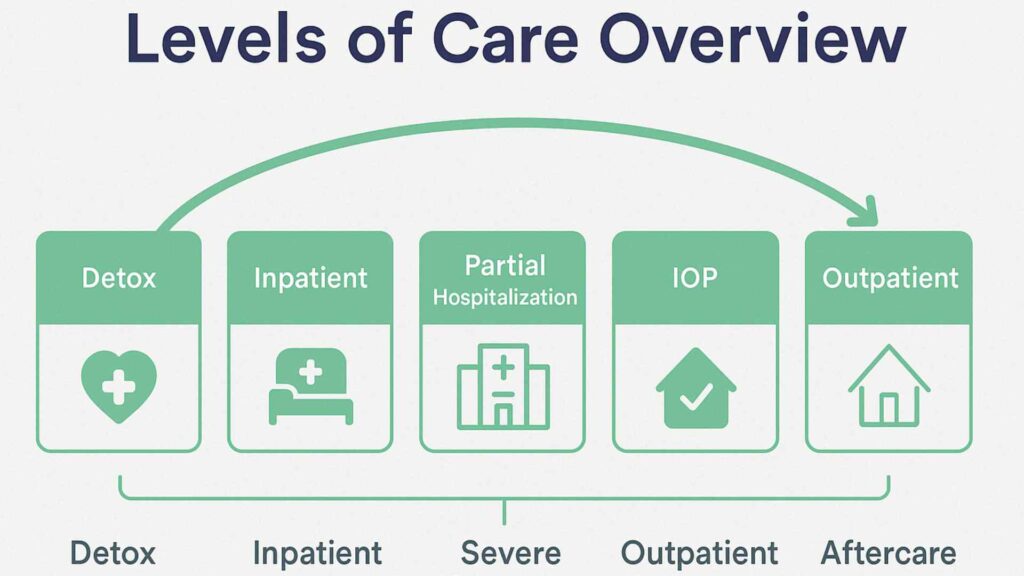
How Do Intensive Outpatient Programs Differ from Inpatient Care?

The main difference between these levels of care is the intensity of supervision. Inpatient care requires you to live at a facility where medical staff can monitor you twenty-four hours a day. While this is necessary for those in active withdrawal or with severe symptoms, it can be a significant barrier for adults with daily responsibilities. Intensive outpatient treatment usually requires about three hours of therapy per session, occurring several days a week. This structure allows you to practice the coping strategies you learn in behavioral therapy the moment you walk out the door.
| Feature | Intensive Outpatient Treatment (IOP) | Inpatient or Residential Care | Standard Outpatient Therapy |
| Living Situation | You live at home | You live at the facility | You live at home |
| Weekly Hours | Usually 9 to 15 hours per week | 24/7 clinical supervision | 1 to 2 hours per week |
| Flexibility | High; works with jobs/family | Low; requires full leave | High; very minimal impact |
| Primary Focus | Skills practice in real-time | Stabilization and safety | Maintenance and talk therapy |
Addressing Dual Diagnosis and Mental Health Care
Many people who seek addiction treatment are also dealing with mental disorders like depression, anxiety, or bipolar disorder. This is known as a dual diagnosis. It is vital that your treatment program addresses both aspects of your health simultaneously. If you only treat the substance use and ignore the underlying mental health conditions, the risk of a relapse can increase significantly.
Modern intensive outpatient treatment is designed to address mental health concerns that can fuel addiction. Depending on your substance use disorder and treatment plan, you might receive medication management alongside counseling to help stabilize your symptoms.
By integrating mental health and addiction care, you are treating the person as a whole. You are not just a set of symptoms to be managed; you are an individual with unique needs. This approach helps you develop resilience against the stressors that might have led to drug abuse in the first place.
Balancing Addiction Treatment with Your Daily Life
One of the biggest fears adults have is that seeking help will make their lives fall apart. You might worry about what your boss will think or how you will explain your absence to your kids. Intensive outpatient treatment is built for people like you.
Because sessions are often offered in the morning or evening, you can continue to show up for your responsibilities. This lack of disruption is a major factor in why many people find an IOP to be worth the effort. You don’t have to choose between your career and your health. Instead, your recovery becomes a part of your daily routine. This teaches you how to navigate life’s challenges without turning back to old habits.
Financial Factors and the Cost of Treatment Programs
The cost of treatment is a very real concern for most families. Inpatient care is often much more expensive because you are paying for lodging, twenty-four-hour medical staffing, and meals. Intensive outpatient treatment generally costs about half as much as residential programs because it focuses strictly on the clinical services. Many commercial insurance plans will cover these programs as a standard mental health benefit if they are deemed medically necessary. This makes high-quality medicine and therapy accessible to a much wider range of people.
| Cost and Access Factors | IOP Benefits | Inpatient Challenges | Patient Impact | Long-Term Value |
| Insurance Coverage | Often fully or partially covered | May require high daily co-pays | Lower financial stress increases treatment adherence | Improves treatment completion rates |
| Total Price | Usually significantly less than inpatient | High due to facility overhead | More affordable access to care | Reduces financial barriers to sustained recovery |
| Income Impact | You can keep working/earning | Often requires unpaid leave | Maintains stability and routine | Supports long-term independence |
| Logistics | No travel or moving costs | May require travel to distant clinics | Easier participation and consistency | Enhances continuity of care |
Building Long-Term Recovery through Social Support
You cannot do this alone. A major part of what makes an intensive outpatient program worth it is the emotional and social support you receive. In group therapy, you meet other adults who are facing similar struggles with trauma, anxiety, and addiction. This reduces the isolation that so often accompanies mental illness. These groups often become lifelong support networks that continue long after the formal program ends.
- Family members are often invited to participate in the healing process.
- Peer groups provide accountability that is hard to find elsewhere.
- You learn how to build a social circle that supports your wellness goals.
FAQs About Intensive Outpatient Treatment
Is intensive outpatient treatment as effective as inpatient rehab?
For many people, the answer is yes. Research suggests that for individuals who do not require medical detox or twenty-four-hour supervision, an intensive outpatient program offers comparable success rates to inpatient care. The key is having a stable and supportive home environment where you can safely practice your new coping skills.
How many hours a week do I need for an intensive outpatient program?
A typical intensive outpatient program involves about nine to nineteen hours of therapy per week. This is usually broken down into three-hour sessions conducted three to five times a week. This schedule is specifically designed to provide significant support while allowing you to maintain your work and family obligations.
Can I work while attending intensive outpatient treatment?
Yes, you certainly can. One of the primary benefits of this level of care is its flexibility. Many facilities offer morning or evening sessions to accommodate various work schedules. This allows you to stay productive and fulfill your professional responsibilities while still prioritizing your mental health and recovery.
Take the Next Step Toward Your Abundant Life
Intensive outpatient treatment offers a powerful and flexible way for adults to reclaim their lives from addiction and mental health challenges. By providing a high level of clinical support that fits into your daily routine, it ensures that you don’t have to pause your life to start healing. If you or a loved one is ready to take the next step, Abundance Treatment is here to support you with evidence-based care and a welcoming community. Discover your abundant life today by contacting our team to learn more about our programs.