Choosing the right addiction treatment can feel difficult to navigate, especially when you’re trying to balance recovery with work, family, and daily responsibilities. Enter outpatient rehab, which offers a flexible, effective path to healing that allows you to maintain your life while getting the support you need. This ultimate guide explores everything you need to know about outpatient addiction treatment, from understanding different program types to determining if it’s the right fit for your recovery journey. Whether you’re considering treatment for yourself or a loved one, you’ll discover how outpatient programs provide structured care, community support, and evidence-based therapies that foster lasting change.
Quick Takeaways
- Outpatient rehab provides flexible addiction treatment that allows you to live at home while attending scheduled therapy sessions throughout the week
- Three main levels exist: traditional Outpatient Program (OP), Intensive Outpatient Program (IOP), and Partial Hospitalization Program (PHP), each offering different intensity levels
- Outpatient treatment programs work best for individuals with stable living environments, strong support systems, and mild to moderate substance use disorders
- Most outpatient programs include individual therapy, group therapy, family therapy, and relapse prevention skills training
- Treatment duration typically ranges from 8-12 weeks for IOP to several months for traditional outpatient care, depending on individual progress.
- Outpatient care costs significantly less than inpatient services, and many commercial insurance plans cover outpatient addiction treatment
What Is Outpatient Rehab? (And Why It’s So Effective)

Outpatient rehab is a form of addiction treatment that allows you to receive professional care for substance use disorder while continuing to live at home. Unlike residential programs that require you to stay at a facility, outpatient treatment programs let you attend scheduled therapy sessions and return home each day. This flexibility allows individuals to:
- Maintain employment
- Attend school
- Care for family members
- Fulfill other responsibilities while working toward recovery
What Makes Outpatient Treatment Work?
The core of outpatient addiction treatment involves regular visits to an outpatient facility where you participate in various therapeutic interventions. These might include individual therapy, group therapy sessions, medication management, and educational workshops. The frequency and duration of visits depend on which level of outpatient program best fits your needs. Studies show both outpatient treatment and inpatient treatment have similar outcomes regarding reducing substance use and increasing periods of abstinence, but outpatient care comes with extra advantages and flexibility.
What makes outpatient rehab particularly valuable is its ability to help you practice recovery skills in real-world settings. You’re not isolated from daily stressors and triggers. Instead, you learn to navigate them with professional guidance and support. This approach builds practical relapse-prevention skills that translate directly into your everyday life. You’ll work with counselors and therapists who understand addiction medicine and can address both substance abuse and any co-occurring mental health conditions.
The Different Types of Outpatient Treatment Programs
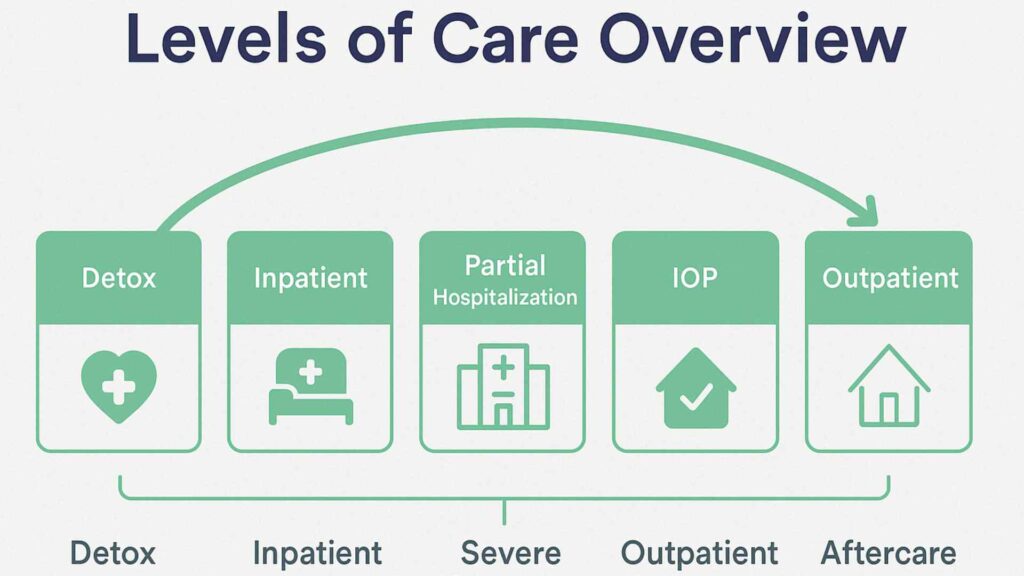
Outpatient treatment isn’t one-size-fits-all. The system includes three distinct levels of care, each designed to meet different recovery needs and circumstances.
Lowest Intensity OP
A traditional Outpatient Program (OP) represents the least intensive option, typically requiring one to two sessions per week. Each session usually lasts one to two hours. This level works well for people who have completed more intensive treatment or those with less severe substance use who need ongoing support. You might attend individual counseling one day and a support group another, creating a sustainable rhythm that reinforces recovery without overwhelming your schedule.
Medium Intensity Outpatient Treatment
The Intensive Outpatient Program (IOP) significantly increases the commitment. Most IOP programs require nine to twelve hours of treatment per week, usually spread across three to four days. Sessions often occur during evenings or mornings to accommodate work schedules. IOP provides structured support for individuals who need more than weekly check-ins but don’t require round-the-clock supervision. You’ll engage in multiple group therapy sessions, individual counseling, and skill-building activities that address the behavioral health aspects of addiction.
High Intensity Outpatient Care
A Partial Hospitalization Program (PHP) offers the highest level of outpatient care, also known as day treatment. PHP typically involves five to six hours of programming, five to seven days per week. This intensive treatment closely resembles inpatient care in structure and therapeutic support, but you return home each evening. PHP works best for people transitioning from residential treatment or those who need intensive support but have a safe, stable living environment. The comprehensive nature of PHP addresses complex co-occurring disorders and provides psychiatric services when needed.
Inpatient and Outpatient Rehab: Key Differences

Knowing what separates inpatient and outpatient rehab helps you make an informed decision about which treatment path serves your recovery best.
Inpatient treatment, also called residential rehab, requires you to live at the facility for the duration of your program, typically 30 to 90 days. You receive 24-hour medical care and supervision in a controlled environment away from triggers and daily stressors. This setting provides maximum structure and support, making it ideal for severe addiction, those with unstable housing, or individuals who have tried outpatient services without success.
Outpatient rehab allows you to sleep at home and maintain your daily routine while attending scheduled treatment sessions. You’re responsible for applying recovery skills between sessions and managing triggers in your actual living environment. This arrangement requires more personal accountability but offers greater flexibility and significantly lower cost. The treatment program adapts to your life rather than requiring you to step away from it entirely.
The choice between these options often depends on several factors:
- Severity of your substance use disorder
- Presence of mental health conditions
- Quality of your home environment
- Availability of family support
- Work or school commitments
- Financial considerations
Many people benefit from starting with inpatient services for stabilization, then transitioning to intensive outpatient or traditional outpatient care for ongoing support. This continuum of care approach provides structure when you need it most, then gradually builds your independence.
Who Benefits Most from Outpatient Addiction Treatment?

Outpatient treatment works exceptionally well for specific populations and situations. Knowing whether you’re a good candidate helps set realistic expectations for your recovery process.
- You’re likely an excellent candidate for outpatient care if you have a stable living situation with supportive family members or roommates who encourage your recovery. A safe space at home, free from active substance use by others, creates the foundation for successful outpatient treatment.
- Your substance use should be mild to moderate rather than severe, and you should have already completed medical detox if needed. Outpatient programs don’t usually provide detox services, so physical withdrawal must be managed separately.
- Strong motivation and commitment to recovery significantly increase your chances of success in outpatient settings. Since you won’t have 24-hour supervision, you need internal drive and the ability to resist temptation between sessions.
- Having work or school obligations that you cannot leave, or family responsibilities that require your presence at home, makes outpatient programs practical and sometimes necessary. Many people simply can’t afford to take months away from employment, making outpatient care the only viable option.
Outpatient addiction treatment also serves people who need dual diagnosis support for co-occurring mental health conditions like anxiety, depression, or trauma. Quality outpatient programs integrate mental health services administration approaches that address both substance abuse and underlying psychiatric diagnoses simultaneously. This comprehensive approach recognizes that lasting recovery requires treating the whole person, not just the addiction.
When is Outpatient Treatment Not Recommended?
However, outpatient care may not suit everyone. If you have a severe addiction with dangerous withdrawal symptoms, unstable housing, lack of transportation to sessions, or a home environment where substances are readily available, you might need a higher level of care first. Being honest about your circumstances helps treatment professionals recommend the most appropriate path.
What is Medicated-Assisted Treatment?
Medication-Assisted Treatment (MAT) combines FDA-approved medications with counseling and behavioral therapies to treat substance use disorders. It’s primarily used for opioid and alcohol addiction, using medications like methadone, buprenorphine, or naltrexone to reduce cravings and withdrawal symptoms. MAT addresses the biological aspects of addiction while supporting psychological recovery, improving treatment outcomes and reducing overdose risk.
What Happens During Outpatient Rehab: The Treatment Process
Understanding what to expect removes anxiety and helps you prepare mentally for the journey ahead. The outpatient addiction treatment process typically follows a structured progression.
Start of Treatment
Your journey begins with a comprehensive intake assessment. During this initial evaluation, which might take two to three hours, a counselor or clinician will ask detailed questions about your substance use history, mental health background, physical health, family situation, and recovery goals. This isn’t about judgment; it’s about gathering information to create a personalized treatment plan that addresses your specific needs. You might complete questionnaires, participate in a clinical interview, and discuss any psychiatric services you’ve received previously.
Developing A Treatment Course
Based on this assessment, your treatment team develops an individualized plan outlining your treatment goals, recommended program level, therapy types, and expected duration. This plan becomes your roadmap, though it’s flexible and adjusts as you progress. You’ll know exactly which days and times you need to attend sessions, what types of therapy you’ll participate in, and how your progress will be measured.
The ‘Meat and Potatoes’ of Outpatient Rehab
The core of your time in outpatient treatment involves attending scheduled sessions consistently. A typical week might include several group therapy sessions where you discuss challenges, share experiences, and learn from others at different stages of recovery. These groups create community support and reduce the isolation many people feel during early recovery. You’ll also have individual therapy sessions, typically weekly, where you work one-on-one with a counselor on personal issues, trauma, relationship problems, or specific triggers unique to your situation.
Many outpatient programs incorporate family therapy to repair relationships and educate family members about addiction and recovery. Family involvement strengthens your support system and helps loved ones understand how to encourage your progress without enabling harmful behaviors. Educational sessions teach you about the science of addiction, how substances affect your brain and body, and practical recovery skills for managing cravings and stress.
Knowing When to Go to the Next Phase
Throughout treatment, you’ll practice relapse prevention techniques and develop a safety plan for high-risk situations. Your counselor helps you identify warning signs, build healthy coping mechanisms, and create strategies for maintaining abstinence after completing the program. As you near completion, your team works with you on aftercare planning, connecting you with support groups, community resources, and ongoing counseling to sustain your recovery long-term.
The Role of Evidence-Based Therapies in Outpatient Care
Effective outpatient treatment programs rely on therapeutic approaches backed by scientific research. These evidence-based practices have been proven to help people overcome addiction and build healthier lives.
- Cognitive Behavioral Therapy (CBT) forms the backbone of most outpatient addiction programs. This approach helps you identify and change negative thought patterns that lead to substance use. You’ll learn to recognize triggers, challenge irrational beliefs, and develop healthier ways of thinking and responding to stress. CBT provides practical tools you can use immediately when facing cravings or difficult situations.
- Motivational Interviewing strengthens your personal commitment to change. Rather than telling you what to do, therapists using this technique help you explore your own reasons for wanting recovery. This collaborative approach resolves ambivalence and builds intrinsic motivation that sustains you through challenging moments. You discover your own compelling reasons to stay sober rather than simply following someone else’s advice.
- Dialectical Behavior Therapy (DBT) teaches emotional regulation, distress tolerance, and interpersonal relationship skills. Originally developed for borderline personality disorder, DBT has proven highly effective for substance use disorder, especially when combined with mental health conditions. You learn to sit with uncomfortable emotions without turning to substances, communicate effectively, and maintain healthy boundaries.
- Group therapy creates powerful opportunities for connection and mutual support. Sharing your story and hearing others’ experiences reduces shame, normalizes struggles, and provides hope. Group sessions teach interpersonal skills, offer different perspectives, and build the community support essential for long-term recovery. Many people form lasting friendships in group therapy that continue supporting their recovery journey well after treatment ends.
- Family therapy addresses the ways addiction impacts relationships and helps repair damaged trust. Family members learn about addiction as a disease, practice effective communication, and establish healthy boundaries. This therapy recognizes that recovery happens within a social context and that healing relationships strengthen overall outcomes.
How Outpatient Programs Address Co-Occurring Mental Health Conditions

Substance use disorder rarely exists in isolation. Research indicates that approximately 50 percent of people with severe mental health conditions also experience substance abuse issues, and vice versa. This overlap, called dual diagnosis or co-occurring disorders, requires integrated treatment for successful recovery. According to research in recent years, the prevalence of dual disorders coinciding with substance use disorders is high and steadily increasing.
Quality outpatient programs recognize that untreated mental health conditions often drive substance use. People might use alcohol or drugs to self-medicate symptoms of depression, calm anxiety, escape traumatic memories, or quiet racing thoughts. Without addressing these underlying issues, achieving sustainable recovery becomes extremely difficult. The substances might temporarily relieve symptoms, but they ultimately worsen mental health and create a destructive cycle.
A Comprehensive Solution is an Integrated Solution
Comprehensive outpatient addiction treatment provides psychiatric services alongside substance abuse counseling. You might work with a psychiatrist who can diagnose mental health conditions and prescribe appropriate medications. This medical care complements therapy by stabilizing your mood, reducing anxiety, or addressing other symptoms that make early recovery challenging. Medication isn’t always necessary, but when indicated, it significantly improves outcomes.
Your individual therapy sessions will explore the relationship between your mental health and substance use. A skilled therapist helps you develop healthier coping mechanisms for difficult emotions, process past trauma, and build self-esteem. This emotional work forms the foundation for lasting behavioral changes.
Outpatient Rehab Cost and Insurance Coverage
Financial concerns often create barriers to seeking treatment, but knowing your options makes addiction care more accessible than many people realize.
Outpatient treatment costs significantly less than inpatient services because you’re not paying for 24-hour room and board. Most commercial insurance plans cover outpatient addiction treatment as an essential health benefit, thanks to expansions to health parity laws meant to increase access to addiction treatment.
Your specific coverage depends on your plan’s terms, deductible, and whether the facility is in-network with your insurance provider. Many outpatient facilities accept multiple insurance types and can verify your benefits before you begin treatment. This verification process tells you exactly what you’ll owe out of pocket, preventing financial surprises.
What If I Don’t Have Insurance?
If you lack insurance or your plan provides limited coverage, don’t give up hope. Many outpatient programs offer sliding scale fees based on income, payment plans that spread costs over time, or scholarships for people in financial hardship. Some community-based programs receive government funding that allows them to serve uninsured residents at reduced or no cost. State-funded options exist through departments of health or mental health services administration agencies.
The investment in outpatient care returns value far beyond the monetary cost. Addiction’s financial toll through lost productivity, legal problems, medical complications, and damaged relationships vastly exceeds treatment expenses. People who complete outpatient programs typically see improvements in employment stability, physical health, relationships, and overall quality of life. The cost of not treating addiction is always higher than the cost of getting help.
Building Your Support System During Outpatient Treatment
Recovery doesn’t happen in isolation. The community support and relationships you build during and after treatment significantly influence your long-term success.
- Support groups provide a connection with others who understand addiction firsthand. Groups like SMART Recovery, Refuge Recovery, or other mutual aid organizations create safe spaces where you belong and matter.
- Family involvement strengthens your foundation, and family therapy repairs damaged trust and teaches healthier communication patterns. When family members participate in your recovery process, they become allies rather than obstacles.
- Recovery coaches or sponsors offer one-on-one guidance from someone who has walked this path before. A sponsor can talk you through a craving at midnight or help you process a difficult situation before it spirals.
- Building sober friendships creates a new social network that doesn’t revolve around substance use. Cultivating friendships with people who support sobriety gives you safe places to socialize and authentic connections that reinforce positive behavioral changes.
- Professional support continues beyond intensive treatment completion. Maintaining regular contact with a counselor or therapist, even after stepping down to less intensive care, provides continuity and catches potential problems early. Many people benefit from monthly or quarterly check-ins for years after completing formal programming.
The Intake Process: What Happens When You First Reach Out
Taking that first step to contact an outpatient facility can feel intimidating. Knowing what to expect during intake reduces anxiety and helps you prepare.
Reaching Out For Help
Initial contact often begins with a phone call to the facility.
- A staff member will ask basic questions about your situation to determine if their program fits your needs.
- They’ll gather information about what substances you’ve been using, how long you’ve been struggling, any previous treatment you’ve received, and what prompted you to reach out now.
- This conversation isn’t an interrogation; it’s about understanding how to help you most effectively. Be honest about your situation so they can make appropriate recommendations.
Getting Your Assessment
If the program seems like a good fit, you’ll schedule a comprehensive assessment appointment. This typically occurs within a few days of initial contact, though some facilities can accommodate same-day or next-day assessments for urgent situations. The assessment can take a significant amount of time and involves detailed interviews, questionnaires, and possibly drug screening. You’ll discuss your substance use history, mental health background, medical conditions, family situation, legal issues, employment status, and recovery goals.
What to Bring During Intake
Bring relevant documentation to your assessment, like your photo identification, insurance card, list of current medications, previous treatment records if available, and information about any legal requirements for treatment. If you’re on probation or parole, bring your officer’s contact information. Having these documents ready streamlines the process and ensures accurate planning.
The assessment leads to a recommended treatment plan outlining which level of care best serves your needs, expected program duration, session schedule, and therapeutic approaches that will be used. Your treatment team explains this plan thoroughly, answering questions and addressing concerns. You’re an active participant in planning, not just a passive recipient. If anything feels unclear or doesn’t seem right for you, speak up. Good facilities value your input and adjust plans when reasonable concerns arise.
What to Finish Before Treatment Can Begin
Before beginning treatment, you’ll complete admission paperwork, including consent forms, financial agreements, and privacy notices. If you’re using insurance, the facility verifies your benefits and explains your financial responsibility. Many places require payment arrangements to be settled before starting sessions. Once paperwork is complete, you’ll receive your schedule and can begin attending groups and individual sessions according to the treatment plan.
Frequently Asked Questions About Outpatient Rehab
What happens during outpatient rehab?
You attend scheduled therapy sessions at an outpatient facility while living at home. Treatment includes individual counseling, group therapy, family sessions, and educational workshops about addiction and recovery skills. You’ll work with counselors to identify triggers, develop coping strategies, address mental health conditions, and build a sustainable recovery plan. Between sessions, you practice new skills in real-world settings.
What are the different types of outpatient rehab?
Three main types exist: traditional Outpatient Program (OP) with one to two weekly sessions, Intensive Outpatient Program (IOP) requiring nine to twelve hours weekly, and Partial Hospitalization Program (PHP) involving five to six hours daily. Each level provides a different structure intensity. Your treatment team recommends the appropriate type based on substance use severity, mental health needs, and life circumstances.
What is the meaning of outpatient recovery?
Outpatient recovery refers to healing from substance use disorder while maintaining your normal living situation and daily responsibilities. Unlike residential treatment, outpatient care allows you to stay home, continue working, and care for family while receiving professional addiction treatment. It emphasizes applying recovery skills in real-world environments with scheduled professional support rather than 24-hour supervised care.
How long does outpatient rehab usually last?
Duration varies by program type and individual needs. Intensive outpatient programs typically last eight to twelve weeks. Traditional outpatient care often continues for several months to a year with decreasing session frequency. Partial hospitalization programs usually run two to four weeks before stepping down. Your personal progress, substance use severity, and co-occurring conditions influence actual treatment length.
Taking the Next Step Toward Recovery
Recovery from substance use disorder is possible, and outpatient rehab provides a flexible, effective pathway that honors your life circumstances while offering professional support. Whether you’re considering traditional outpatient care, intensive outpatient programming, or partial hospitalization, the key is taking that first step toward help. You’ve learned how outpatient programs work, what to expect during treatment, and how to choose the right level of care for your situation.
At Abundance Treatment in Toledo, Ohio, we understand that seeking help takes courage. Our PHP, IOP, and traditional outpatient programs provide compassionate, evidence-based care that treats you like family. We integrate mental health support alongside addiction treatment, recognizing that lasting recovery addresses the whole person. Our community-focused approach creates a welcoming environment where you can build the recovery skills, community connections, and personal resilience needed for long-term wellness.
You don’t have to face addiction alone. Whether you’re ready to begin treatment or simply want to learn more about your options, reaching out connects you with caring professionals who understand your journey. Contact us today and discover your abundant life in recovery.